Introduction
When most people hear the word desertification, they picture golden sand dunes slowly creeping across the land and swallowing villages, like a tide coming in. It’s a dramatic image, and it isn’t entirely wrong, but it misses what’s really going on. Desertification is less about deserts marching outward and more about living, productive land losing its ability to support life.
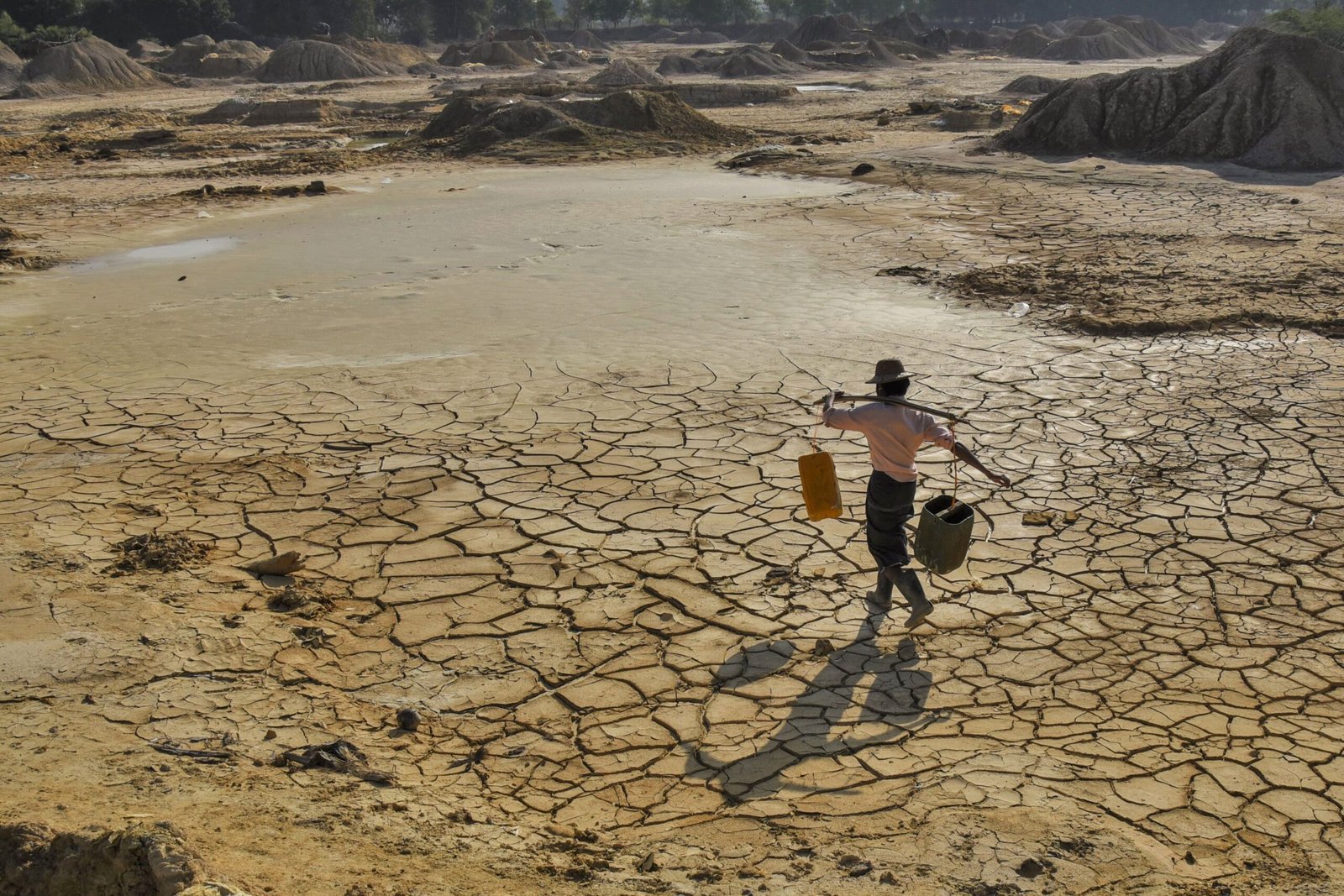
It happens when dry regions, which are naturally fragile, are pushed past what they can handle. Soil erodes, plants disappear, water sources shrink and the ground that once fed families turns into something hard, bare and unproductive. The process can take decades, or it can accelerate quickly after a bad drought or a few years of heavy overuse.
This essay looks at what desertification is, what causes it, how it affects people and ecosystems, and what the world is doing, and could be doing, to stop it. Like many environmental problems, it’s serious and still growing in many places. But it’s also one where there are real, proven ways to turn things around.
What Desertification Actually Means
The United Nations defines desertification as land degradation in arid, semi-arid and dry sub-humid areas, resulting from various factors, including climate variations and human activities. The key word is degradation. Desertification doesn’t mean that existing deserts like the Sahara or the Gobi are expanding in a neat line. It means that land at the edges of, or well away from, those deserts becomes desert-like because its soil, vegetation and water have been damaged.
These dry regions are known as drylands, and they’re far more important than many people realize. They cover roughly 40 percent of the world’s land surface and are home to well over two billion people. They include grasslands, savannas, scrublands and farmland across Africa, Asia, Australia, the Americas and the Mediterranean. Many of the world’s poorest communities live in them, and many depend directly on the land for food, water and income.
Drylands are especially vulnerable because rainfall is low and unpredictable, and the soil has little organic matter to protect it. Plants grow slowly and recover slowly. A level of grazing or farming that would be fine in a wetter region can quickly cause lasting damage here.
The Main Causes
Desertification rarely has a single cause. It usually results from a combination of natural conditions and human pressure, with climate change now making things worse.
Overgrazing
In many dry regions, livestock are the foundation of livelihoods. But when too many animals graze on the same land for too long, they eat the grass faster than it can regrow. Trampling compacts the soil, and bare ground is left exposed to wind and water erosion. Once the plant cover is gone, rain runs off instead of soaking in, and the land becomes less and less able to recover.
Unsustainable Farming
Farming on marginal land, with too little time for the soil to rest, wears it out. Repeated plowing, growing the same crop year after year and removing all crop residues leave the ground depleted and loose. Poor irrigation is another culprit. In arid areas, evaporating irrigation water leaves salt behind, and over time the soil becomes so salty that crops can no longer grow. This salinization has ruined large areas of farmland around the world.
Deforestation and Loss of Vegetation
Trees, shrubs and grasses hold the soil together, provide shade, and bring moisture back into the cycle. In many dry regions, people depend on wood for cooking fuel and building. When woodland is cut faster than it regrows, the land loses its protective cover. Clearing vegetation for farming or settlement has the same effect. Without roots to anchor it, topsoil blows or washes away.
Water Mismanagement
Taking too much water from rivers, lakes and underground aquifers can dry out whole landscapes. The Aral Sea in Central Asia is a famous example. Rivers feeding it were diverted to irrigate cotton fields, and the sea shrank dramatically, leaving a salty, dusty plain behind and harming local fisheries, health and climate. Over-pumping groundwater lowers water tables so that vegetation can no longer reach moisture.
Climate Change and Drought
Rising temperatures increase evaporation, and shifting rainfall patterns bring longer, deeper droughts to many dryland regions. Drought by itself doesn’t cause desertification, since healthy land usually bounces back when the rains return. But land that has been weakened by overuse recovers much more poorly. Climate change and human pressure reinforce each other, pushing fragile areas toward a tipping point.
Poverty and Weak Governance
Behind many of these direct causes are deeper social and economic pressures. People living with poverty and limited options may have no choice but to overuse the land that sustains them, cutting trees for fuel or grazing animals on depleted pasture simply to survive. Unclear land rights, weak institutions, population pressure and conflict make it harder to manage land for the long term. People rarely invest in protecting land they might lose.
The Consequences
The most immediate result of desertification is that land produces less. Crop yields drop, pastures thin out and livestock die. For farmers and herders who rely on the land, that means lower incomes, food shortages and deeper poverty. According to UN assessments, land degradation affects a large share of the world’s land, and a significant part of the global population feels the effects.
Water Scarcity
Degraded land absorbs less rain and stores less water. Springs dry up, wells run dry and rivers become more seasonal. Women and children, who are often responsible for collecting water, must walk further each day, taking time away from school and other work.
Dust Storms and Health Problems
Bare, dry soil is easily lifted by the wind. Dust storms can blanket towns hundreds or even thousands of kilometers from their source, damaging crops, clogging machinery, and causing respiratory and eye problems. Fine dust particles can also carry bacteria and pollutants, and they affect air quality far beyond the affected region.
Loss of Biodiversity
Drylands might look empty, but they host an impressive range of specially adapted plants and animals. When the vegetation disappears, so do the insects, birds and mammals that depend on it. Many dryland species are found nowhere else, so their loss is permanent.
Climate Feedback
Soil and vegetation store carbon. When land is degraded, that stored carbon is released into the atmosphere, adding to climate change. At the same time, a warmer, drier climate makes the land even more vulnerable. It’s a vicious circle, which is why restoring land is increasingly seen as part of climate action as well as a development goal.
Migration and Conflict
When land can no longer support people, many have little choice but to leave. Rural families move to cities or to other countries, sometimes under dangerous conditions. Competition for shrinking resources such as water and grazing land can fuel tensions between communities. Scarcity doesn’t automatically cause conflict, but it can make existing disputes worse, especially where governance is already fragile.
A Closer Look: The Sahel
The Sahel, the semi-arid belt just south of the Sahara stretching across Africa, is often held up as a symbol of the problem. In the 1970s and 1980s, severe droughts combined with growing populations and intensive land use caused widespread crop failure, livestock deaths and famine. The images that came out of the region shaped how the world saw desertification.
But the story hasn’t been only one of decline. In parts of Niger, farmers have restored millions of hectares by protecting and nurturing trees that regrow naturally from stumps and roots in their fields, an approach known as farmer-managed natural regeneration. The trees improve soil fertility, provide fodder, fuel and fruit, and protect crops from wind. Without major expense, many communities have increased their food production and resilience. It’s a hopeful reminder that degraded land can recover, and that local people are often the best agents of change.
Prevention and Restoration Strategies
The world has been working on this issue for decades. In 1994, countries adopted the United Nations Convention to Combat Desertification, which commits nations to addressing land degradation, and each year the world marks a day dedicated to the subject in June. Beyond international agreements, a wide range of practical strategies are being used on the ground.
Sustainable land management. Rotational grazing gives pastures time to recover. Cover crops, crop rotation, reduced tillage and mulching protect soil and rebuild its organic matter. These approaches also help the land hold water.
Agroforestry and tree planting. Planting trees among crops and pastures provides shade, shelter from wind, fodder and fuel, and it improves the soil. Shelterbelts, which are rows of trees planted to break the wind, protect fields from erosion.
Water harvesting. Techniques such as stone lines, half-moon pits, small earth dams and terraces catch scarce rainfall and let it soak into the ground rather than rushing away. Many of these methods are inexpensive and draw on traditional knowledge.
Efficient irrigation. Drip irrigation delivers water directly to plants, limiting evaporation and salt build-up. Careful management prevents over-pumping of groundwater.
Restoring degraded land. Reseeding native grasses, planting suitable shrubs and trees, stabilizing dunes and fencing off recovering areas can bring degraded land back to life. China’s Loess Plateau restoration, which transformed vast eroded landscapes through terracing, replanting and grazing controls, is a widely cited example of success on a large scale.
Large-scale initiatives. The Great Green Wall, launched by African nations in 2007, aims to restore degraded land across the Sahel, creating a mosaic of trees, grasslands and farms. Progress has been uneven and slower than hoped, but it has inspired local projects and highlighted the importance of land restoration for livelihoods.
Alternative livelihoods and energy. Reducing pressure on land also means giving people other ways to earn a living and cook their food. Clean cookstoves, solar energy, small businesses and better access to markets can ease reliance on cutting trees or overgrazing.
The Human Element: Communities, Knowledge and Rights
Technology and funding alone won’t solve this. Successful programs tend to place local communities at the center. When people have secure rights to the land they use, they have a reason to look after it. When they take part in planning and decision-making, solutions are more likely to fit local conditions and to last.
Traditional knowledge matters a great deal here. Pastoralist communities have managed dryland rangelands for generations through seasonal movement of livestock. Farmers have developed ways of conserving water and soil that suit local conditions. Pairing that knowledge with scientific tools such as satellite monitoring, improved seeds and early-warning systems often gives the best results.
Women deserve special attention. They do much of the farming, water collection and household management in many dryland regions, yet they often have less access to land, credit and training. Supporting them improves outcomes for families and for the land.
Policy, Finance and Global Cooperation
Because land degradation affects food prices, migration, climate and security far beyond affected regions, preventing it is a shared concern. Governments can support sustainable land use by clarifying land tenure, directing subsidies toward practices that protect soil and water, enforcing rules on overgrazing and deforestation, and investing in rural infrastructure, education and research.
Finance is a persistent obstacle. Restoration projects often need money up front and pay off over many years, which makes them hard to fund in poor regions. International funding, partnerships with the private sector, and payments for ecosystem services such as carbon storage can all help close the gap. Prevention is also far cheaper than cure. Restoring badly degraded land costs much more than managing it well in the first place.
What Individuals Can Do
Desertification can feel remote for people who don’t live in drylands, but we’re all connected to it through food, trade and climate. Supporting sustainably produced food, wasting less of it, reducing our carbon footprint and backing organizations that work on land restoration all help. So does staying informed and encouraging leaders to take land and water issues seriously.
Conclusion
Desertification is a slow-moving crisis that rarely makes headlines, yet it touches billions of lives. It begins with fragile land, gets worsened by overuse and a changing climate, and ends in hunger, displacement and lost ecosystems. Poverty and weak governance often keep the cycle going.
But it isn’t inevitable. From farmers regrowing trees in Niger to terraced hillsides in China, there are real examples of degraded land turning green again. The tools exist: better grazing, smarter water use, tree cover, secure land rights and strong support for local communities.
What’s needed now is scale, patience and commitment. Healthy land takes time to build and is quick to lose, which is why acting early matters so much. Protecting drylands is ultimately about protecting people, and giving the next generation soil that can still feed them.
About the Author