Introduction
You breathe about twenty thousand times a day, and almost none of those breaths are a choice. That is what makes air pollution so unsettling. You can pick your food, filter your water, and choose where to work, but the air simply comes with the place you live. Around the world, millions of people die early each year because of what is in it, and many more live with coughs, heart trouble, and damaged lungs. The good news is that air pollution is one of the most solvable environmental problems we have. Cities and countries have cleaned up their skies before, and the methods are well known. This article covers where the pollution comes from, what it does, and how we can reduce it.
What Is Air Pollution?
Air pollution is the presence of substances in the atmosphere at levels that harm people, animals, plants, or materials. Some are solid particles, some are liquid droplets, and some are gases. They can be released directly, like smoke from a chimney, or formed in the air when other chemicals react in sunlight. Pollution also comes in two main settings. Outdoor, or ambient, pollution is what hangs over streets and cities. Indoor, or household, pollution comes mostly from burning fuel for cooking and heating in poorly ventilated homes. Both are serious, and together they are among the leading environmental threats to human health worldwide.
The Main Pollutants
Scientists and regulators keep a close eye on a handful of key culprits. Particulate matter is a mix of tiny solids and droplets. Nitrogen dioxide comes mostly from burning fuel at high temperatures, especially in engines. Sulfur dioxide is released when coal and oil containing sulfur are burned. Carbon monoxide is a colorless gas from incomplete combustion, and it interferes with the blood’s ability to carry oxygen. Ground-level ozone is formed by chemical reactions in sunlight. Add to that volatile organic compounds, heavy metals such as lead, and toxic chemicals like benzene. Each has its own sources and health effects, but they often travel together in the same polluted air.
Particulate Matter: The Tiny Troublemaker
If one pollutant deserves top billing, it is fine particulate matter, known as PM2.5. These particles measure less than 2.5 micrometers across, roughly thirty times thinner than a human hair. That size is the problem. They slip past the body’s natural defenses in the nose and throat, burrow deep into the lungs, and can even enter the bloodstream. Researchers have linked them to heart attacks, strokes, lung cancer, and asthma. They come from vehicle exhaust, power plants, wood and crop burning, construction dust, and many industrial processes. In 2021, the World Health Organization tightened its recommended annual limit for PM2.5 to 5 micrograms per cubic meter, and most of the world’s population breathes air above that level.
Ground-Level Ozone and Smog
Ozone high in the atmosphere protects us from ultraviolet rays, but at ground level it is a harmful pollutant. It is not emitted directly. Instead, it forms when nitrogen oxides and volatile organic compounds react in the presence of heat and sunlight, which is why ozone peaks on hot, sunny afternoons. The result is the hazy cocktail known as smog. Ozone irritates the airways, triggers asthma attacks, and reduces lung function even in healthy people. It also damages crops and forests. Because it needs sunshine and warmth to form, climate change is likely to make ozone episodes worse in many regions unless the pollutants that create it are cut.
Vehicles and Transport
Cars, trucks, buses, ships, and planes are a major source of pollution, especially in cities. Diesel engines are notorious for releasing nitrogen oxides and fine particles, while gasoline engines emit carbon monoxide and compounds that form ozone. Pollution does not only come from the tailpipe. Brake pads and tires wear down into particles, and heavy traffic kicks up road dust. Congested streets trap the problem at the level where people walk, cycle, and play, so residents near busy roads face higher exposure. Ports and airports add their own plumes. Transport is also a growing concern in rapidly urbanizing countries, where vehicle numbers are climbing faster than emissions rules.
Power Plants and Industry
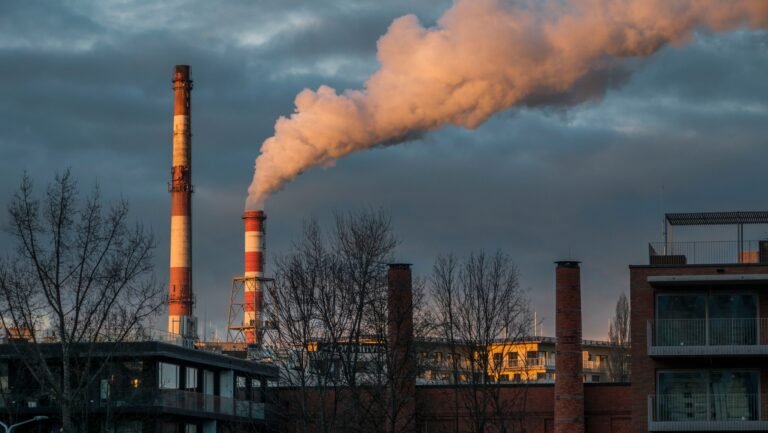
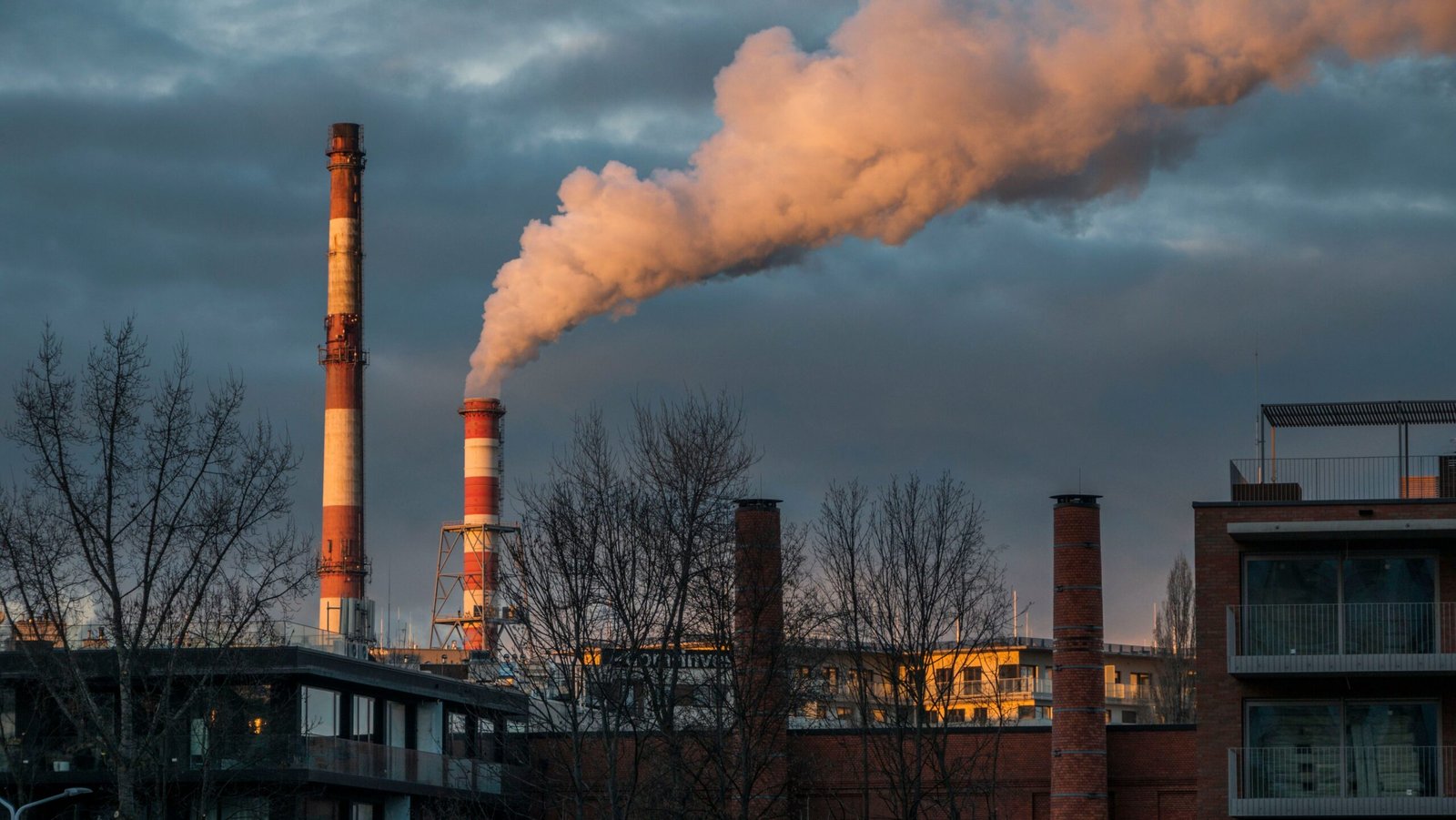
Burning coal, oil, and gas to produce electricity has long been a leading source of sulfur dioxide, nitrogen oxides, and particles. Coal is the dirtiest of the three, and it also releases mercury and other heavy metals. Factories add their own cocktails, from steel mills and cement kilns to chemical plants and refineries. Mining and quarrying kick up dust, and smelters can release toxic metals. Many of these emissions come from tall smokestacks that were once thought to solve the problem by dispersing it, but all that did was spread it farther. Pollution crossing borders is now a common issue, with downwind regions suffering for choices made hundreds of miles away.
Agriculture and Waste Burning
Farming is an underrated source of air pollution. Livestock manure and fertilizers release ammonia, which reacts in the air with other pollutants to form fine particles. In many regions, farmers burn crop residue after harvest to clear fields quickly, sending thick smoke across whole regions, a seasonal problem in parts of South Asia. Open burning of household and municipal waste is also common where collection is poor, and it releases a toxic stew including dioxins. Landfills emit methane, which contributes to ozone formation. These sources are often less regulated than factories, and they hit hardest in areas where the people affected have little say.
Household Pollution: Cooking and Heating
For roughly two billion people, cooking still means burning wood, dung, charcoal, or kerosene over an open fire or a simple stove. In a small, poorly ventilated home, that smoke can reach levels many times higher than outdoor air in the dirtiest cities. Women and young children, who spend the most time near the fire, bear the brunt. Household air pollution is linked to pneumonia in children, chronic lung disease, and heart problems, and it kills millions of people each year. Collecting fuel also takes time and can be dangerous. Cleaner cooking, with electricity, gas, biogas, or improved stoves, is among the most effective health interventions available.
Natural Sources
Not all pollution is man-made. Volcanoes release sulfur dioxide and ash, dust storms blow particles from deserts across oceans, sea spray adds salt, and wildfires started by lightning send up smoke. Plants emit natural volatile compounds, which are responsible for the haze over some forested mountains. These sources matter, but they are not the main reason the air in so many cities is unhealthy. Human activities have layered additional pollution on top of natural background levels, and climate change is making some natural sources, especially wildfires and dust, more intense. That blurs the line between natural and human-caused in a way worth paying attention to.
Effects on Human Health
The health toll of dirty air is enormous. Estimates from the World Health Organization put premature deaths from ambient and household air pollution combined at around seven million per year. The damage reaches well beyond the lungs. Polluted air raises the risk of heart disease, stroke, lung cancer, chronic bronchitis, and asthma, and emerging research links it to diabetes, dementia, and complications in pregnancy. Short-term spikes send people to hospitals with breathing trouble and heart problems. Long-term exposure is a slow, steady drain, shortening lives and reducing quality of life. Because pollution affects nearly everyone, even small increases in risk add up to a huge public health burden.
Children, Older Adults, and Vulnerable Groups
Some people suffer more than others. Children breathe faster than adults and their lungs are still developing, so polluted air can stunt lung growth and raise the odds of asthma. Exposure during pregnancy is associated with premature birth and low birth weight. Older adults and people with heart or lung disease are more likely to be hospitalized during pollution spikes. Outdoor workers, street vendors, and traffic police inhale more than the rest of us. Low-income communities are often exposed to the worst air, living next to highways, factories, and power plants, while having fewer resources to deal with the consequences. Pollution, in other words, is also a justice issue.
Effects on Ecosystems and Wildlife
Pollutants do not stay in the air. Sulfur dioxide and nitrogen oxides turn into acid rain, which acidifies lakes and soils, harms fish, and damages forests. Excess nitrogen settles on land and water, fertilizing the wrong plants, upsetting delicate ecosystems, and feeding algae blooms. Ozone damages plant tissue, reducing the yields of crops such as wheat and soybeans and weakening trees. Heavy metals like mercury accumulate in food chains, building up in fish and the animals and people that eat them. Smog dims sunlight and can even disrupt the ability of insects and birds to navigate. Wildlife has no way to avoid it.
Air Pollution and Climate Change
The two problems are tangled together. Burning fossil fuels causes both, so cutting fossil fuel use helps on both fronts. Some pollutants warm the planet directly. Black carbon, or soot, absorbs sunlight, and methane and ozone are potent greenhouse gases. Others have a cooling effect, notably the sulfate particles from coal, which reflect sunlight. That creates an awkward truth: cleaning up some air pollution can unmask a bit of extra warming. It is no reason to delay, though, since the health benefits are immense and the cooling effect is not a solution. Tackling soot and methane in particular offers quick wins for both health and climate.
Economic and Social Costs
Dirty air costs money as well as lives. The World Bank has estimated that the welfare losses from air pollution run into trillions of dollars a year. Sick days, hospital bills, lost productivity, and reduced crop yields all take a bite. Children who miss school because of respiratory illness fall behind. Cities with heavy smog can lose tourism and talent, and corrosive pollution damages buildings and monuments. On the other side of the ledger, studies repeatedly find that the benefits of air quality regulations outweigh their costs by a wide margin. Clean air is not a luxury that countries grow into. It is an investment that pays back.
Prevention at the Source
The most effective strategy is to stop pollution before it starts. That means shifting electricity generation from coal to wind, solar, and other clean sources, and moving transport toward electric vehicles, public transit, cycling, and walking. It means improving energy efficiency in buildings and industry, so less fuel is burned in the first place. In farming, better manure management, precise fertilizer use, and alternatives to crop burning cut emissions. Cleaner fuels, such as ultra-low sulfur diesel, help too. Smart urban planning that reduces the need to drive long distances can lock in benefits for decades. Prevention nearly always beats cleanup.
Control Technologies and Regulation
Where pollution cannot be avoided, technology can trap much of it. Catalytic converters cut harmful gases from car exhaust, and particulate filters capture soot from diesel engines. Scrubbers remove sulfur dioxide from power plant smokestacks, and electrostatic precipitators and bag filters catch dust. Rules give these tools teeth. The phase-out of leaded gasoline, completed worldwide in 2021, was a major public health victory. Clean air laws, like the Clean Air Act in the United States, have dramatically cut pollution while the economy grew. Monitoring networks, public air quality alerts, and strong enforcement are just as vital as the equipment itself.
What Individuals and Communities Can Do
Policy does the heavy lifting, but personal choices still matter. Walking, cycling, carpooling, or taking public transport trims traffic emissions. Choosing efficient appliances, avoiding open burning of trash, and keeping vehicles well maintained all help. On bad air days, checking an air quality app, limiting outdoor exercise, and using a good filter indoors can reduce exposure. Community groups can push for cleaner buses, tree planting, and low-emission zones. Above all, people can use their voices and votes to demand clean air standards. The skies over many cities have cleared before, and with the right choices, they can clear again.
About the Author