Synthetic plastics date back to the early twentieth century, with Bakelite arriving in 1907, but the real explosion began after the Second World War. Factories built for wartime production pivoted to consumer goods, and plastic soon replaced glass, metal, and paper in everything from packaging to furniture. Why wash a cup when you can toss it? Since then, humanity has produced several billion tonnes of plastic, and annual production now exceeds 400 million tonnenhe climate story.
The Scale of the Problem
The numbers are hard to wrap your head around. Only around nine percent of all plastic ever made has been recycled, according to widely cited estimates. A large portion has been landfilled, burned, or simply left in the environment. Packaging, much of it used for just minutes, makes up a big slice of the total. Researchers estimate that somewhere between eight and eleven million tonnes of plastic flow into the oceans each year, roughly a garbage truck’s worth every minute. And production keeps growing, with forecasts suggesting it could nearly triple by 2060 without strong action. The challenge is not just litter. It is the sheer volume of material we keep creating.
How Plastic Reaches the Ocean
Most marine plastic starts on land. Wind blows lightweight bags and wrappers from landfills and streets, rain sweeps litter into storm drains and streams, and rivers carry it out to sea. A relatively small number of rivers, often those flowing through densely populated regions with limited waste collection, are responsible for a large portion of the total. Fishing is another major source, as lost or abandoned nets, lines, and traps add up. Coastal tourism, shipping, and even washing machines contribute. Once plastic reaches the water, currents spread it across the globe. Debris dropped on one shore can wash up on a remote island thousands of miles away.
Bags, Bottles, and Ghost Nets
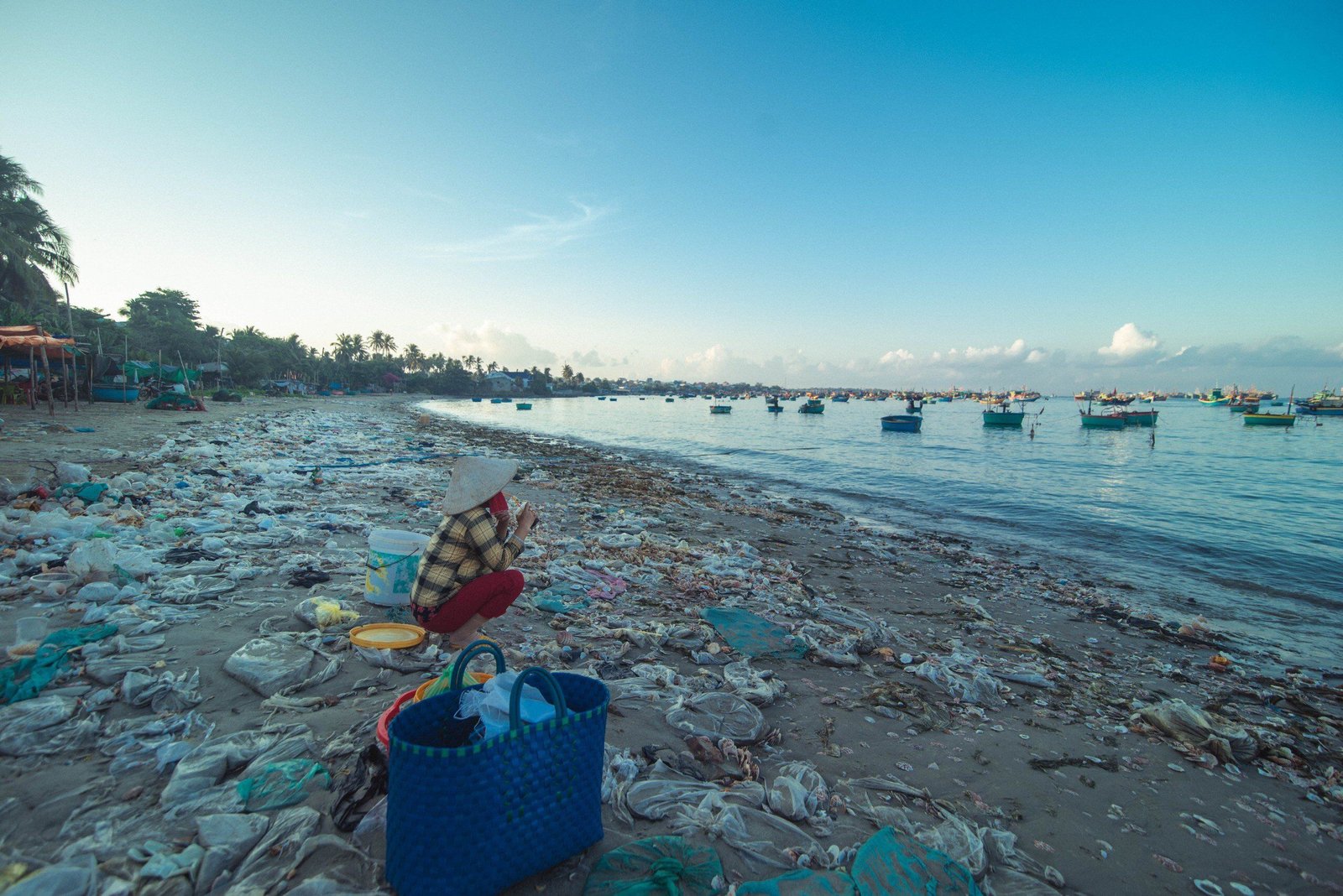
The visible face of plastic pollution is the macroplastic: bottles, bags, food wrappers, straws, and the like. These items are the ones that wash up on beaches and clog urban drains. Among the most destructive are so-called ghost nets, fishing gear lost or dumped at sea that keeps catching animals long after anyone has stopped using it. Turtles, seals, dolphins, sharks, and seabirds can become entangled and drown or starve. Macroplastics also damage coral by smothering it and carrying disease, and they pile up on shorelines, hurting tourism and local livelihoods. The upside is that large debris can at least be seen, collected, and in many cases prevented.
Microplastics and Nanoplastics
Over time, sunlight, waves, and friction break large items into fragments smaller than five millimeters, known as microplastics. Others are made small on purpose, like the beads once added to cosmetics, or are shed by products such as synthetic clothing, car tires, and paint. Even smaller are nanoplastics, particles so tiny they can cross biological membranes. Microplastics have been found in nearly every environment scientists have checked: deep-sea trenches, mountain snow, Arctic ice, farm soil, and the air we breathe. They cannot be cleaned up by nets or beach sweeps. Once they are out there, they are essentially permanent, which makes stopping them at the source the only real strategy.
The Great Garbage Patches
In the middle of ocean basins, rotating currents called gyres gather floating debris. The best known is the Great Pacific Garbage Patch, which spans an area estimated to be many times the size of France. The name is misleading, though. It is not a solid island of trash you could walk on. It is more like a thin soup of plastic fragments, with larger objects mixed in, and studies suggest that a big share of its mass is discarded fishing gear. Similar patches exist in the Atlantic and Indian Oceans. Cleanup efforts have drawn attention, yet experts caution that removing plastic from the open sea is slow and expensive compared with stopping it from getting there in the first place.
Harm to Marine Wildlife
Animals pay a heavy price. Sea turtles often mistake floating bags for jellyfish, their favorite food. Seabirds scoop up bright fragments, and studies have found plastic in the stomachs of a large majority of species examined. Whales have washed ashore with stomachs full of bags and rope. Eating plastic can cause blockages, internal injuries, and a false sense of fullness that leads to starvation. Chicks can be fed plastic by parents who mistake it for food. Entanglement is another danger, trapping animals in six-pack rings and discarded line. Beyond individual victims, plastic can carry invasive species across oceans on floating debris and can absorb toxic chemicals that then enter the food web.
Plastic on Land and in Freshwater
Plastic pollution is not just a marine issue. Rivers and lakes carry heavy loads, and studies have detected microplastics in freshwater fish, sediments, and even rain. On land, farmers spread sewage sludge and compost that contain plastic fibers, and plastic mulch films break down into fragments in the soil. Research suggests that microplastics can affect soil structure, harm earthworms, and possibly influence crop growth, although the long-term effects are still being studied. Livestock and wild animals ingest litter too. In places without regular waste collection, burning plastic in open fires releases toxic smoke, adding air pollution to the mix. The land and the sea are one connected system, and plastic flows through all of it.
Plastic in Our Food, Water, and Bodies
It is now difficult to avoid plastic particles entirely. Studies have found microplastics in bottled and tap water, salt, seafood, honey, beer, and fruits and vegetables, as well as in household dust. Perhaps unsurprisingly, they have also shown up inside people. Researchers have reported detecting microplastics in human blood, lungs, placentas, and other tissues. One recent study linked the presence of plastic particles in arterial plaque to a higher risk of heart attack and stroke, though association is not proof of cause. Scientists are still working out how much we take in, how much stays, and what it does. The research is young, but the early findings are enough to warrant serious attention.
Chemical Additives and Health Concerns
Plastic is not just polymer. Manufacturers add thousands of chemicals to give it color, flexibility, flame resistance, or durability, and some of these are known to be harmful. Bisphenols and phthalates can interfere with hormones, and have been associated with reproductive and developmental problems. Some plastics contain or are made using PFAS, persistent chemicals linked to a range of health concerns. These additives can leach out, especially when plastic is heated or worn down. Plastic fragments in the ocean also act like sponges for pollutants such as pesticides, which can then be consumed by animals. Many additives have never been thoroughly tested, which is one reason scientists are calling for greater transparency and tighter oversight.
Economic and Social Costs
Plastic waste costs money. Cities spend heavily on collecting litter and unblocking drains, and plastic-clogged channels can worsen flooding. Beaches covered in debris scare off tourists, and fishers lose income when gear is fouled or catches decline. Estimates of the total damage to marine ecosystems and the services they provide run into the billions of dollars per year. Plastic also contributes to climate change, since its production, mostly from fossil fuels, is responsible for a few percent of global greenhouse gas emissions. The burden falls unevenly. Informal waste pickers in many countries do vital recycling work in hazardous conditions, and communities near petrochemical plants and incinerators often face higher exposure to pollution.Solutions: Reduce, Redesign, Recycle, Regulate
About the Author