Introduction
It’s easy to walk across a field or a garden without giving the ground a second thought. Soil looks like plain brown dirt, something you wash off your boots. But it’s one of the most complicated and valuable things on the planet. A handful of healthy soil can hold billions of living organisms, along with minerals, water, air and decaying plant matter, all working together in ways scientists are still unraveling.
Almost everything we eat starts in soil. It filters water, stores carbon, supports forests and grasslands, and holds up the buildings and roads we use every day. Yet we rarely treat it as a resource that can be used up. That’s a problem, because in many parts of the world it’s being damaged much faster than it can recover.
This essay explains what soil degradation is, what causes it, why it matters so much for people and the environment, and what can be done to slow it down and even reverse it. The picture is sobering, but there’s real room for hope, because many of the solutions are known and already working.
What Is Soil Degradation?
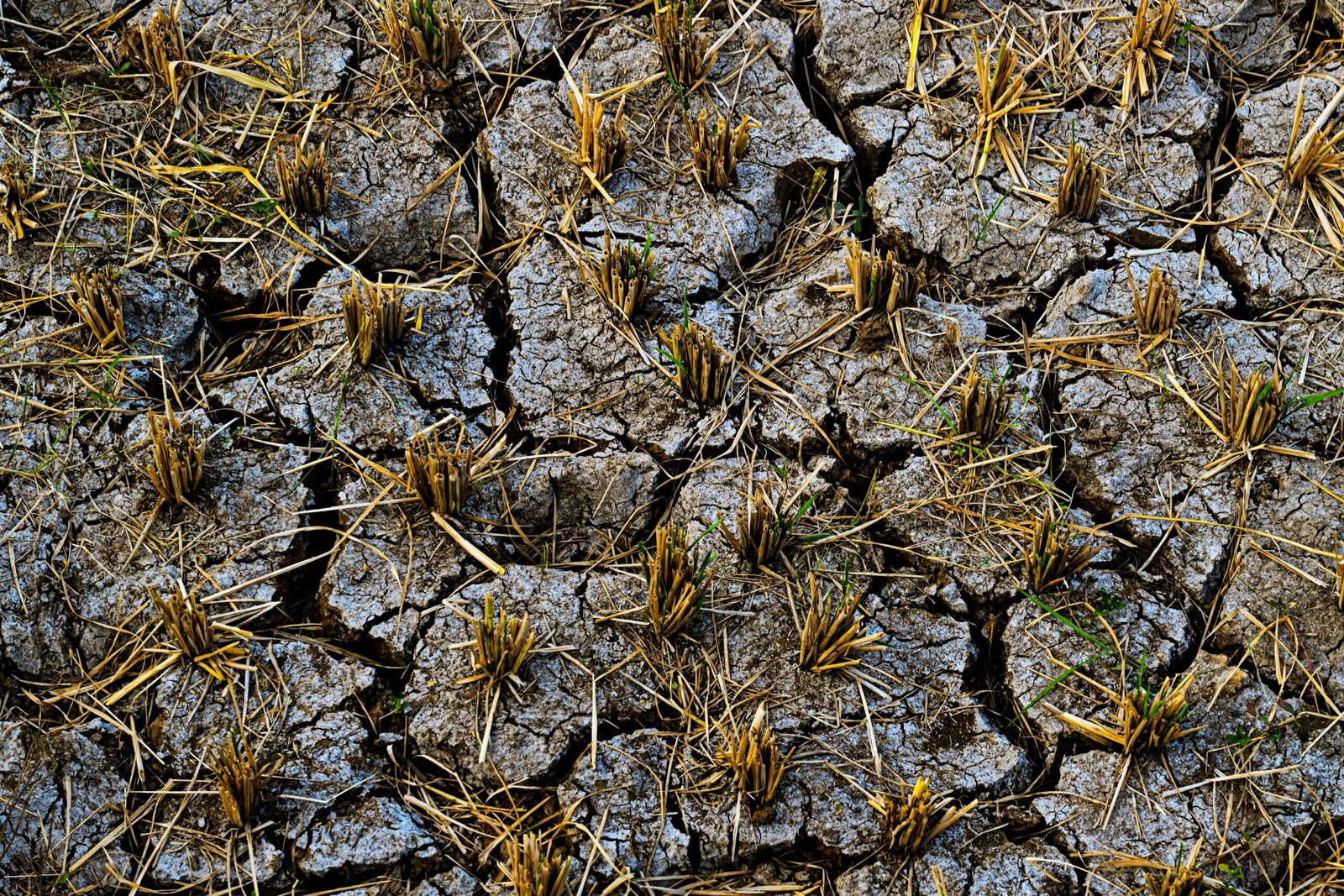
Soil degradation means a decline in the quality and health of soil, which reduces its ability to grow plants, hold water, store nutrients and support life. It can take several forms. Erosion washes or blows away the fertile top layer. Nutrient depletion leaves the soil exhausted. Compaction squeezes out the air and water space that roots need. Salinization causes salts to build up until crops can’t survive. Contamination adds toxic substances. And loss of organic matter strips away the dark, living component that keeps soil fertile and crumbly.
Time is a big part of the story. Soil forms incredibly slowly. It can take hundreds of years, sometimes much longer, for a single centimeter of topsoil to develop from rock and organic material. A heavy storm or a few seasons of poor management can strip it away far faster. That mismatch is why degradation is so serious: once the topsoil is gone, for practical purposes it isn’t coming back within a human lifetime.
The scale is large. The Food and Agriculture Organization of the United Nations has estimated that about a third of the world’s soils are already degraded, and other UN assessments suggest that a large portion of the planet’s land is affected to some degree. The effects touch billions of people.
What Causes It?
Agriculture is the most common driver, which is ironic, since farmers depend on soil more than anyone. Plowing fields and leaving them bare between crops exposes the ground to wind and rain. Growing the same crop year after year drains particular nutrients. Heavy machinery compacts the soil, and overgrazing by livestock strips away the plants that hold it together.
Excessive use of chemical fertilizers and pesticides can also harm the soil’s living community. Fertilizer can bring short-term gains in yield, but over time it may reduce organic matter and disrupt the microbes that keep soil healthy. Poorly managed irrigation brings another danger. In dry regions, evaporating irrigation water leaves salts behind, and over the years the land can turn white and barren.
Deforestation
Trees and other plants are the soil’s natural protectors. Their roots bind the ground, their leaves break the force of falling rain, and their fallen litter feeds the layer beneath. When forests are cleared for farming, timber, mining or building, that protection disappears. On sloping land, the first heavy rains can carry away decades’ worth of fertile soil in a single season.
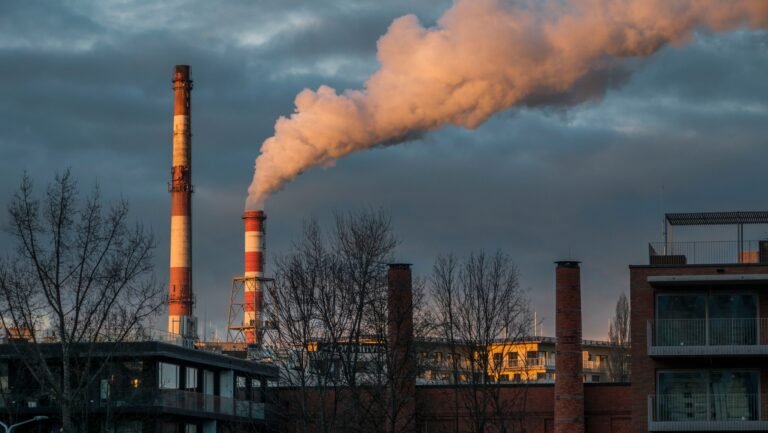
Mining, factories, landfills and fuel spills can contaminate soil with heavy metals, chemicals and oil. Some of these substances remain for decades. Acid rain, wastewater irrigation and improper dumping of industrial waste add to the burden. Contaminated soil doesn’t just harm plants. Toxic substances can move into crops, groundwater and eventually people.
Urban Expansion and Construction
Cities are growing, and every new road, parking lot and housing estate covers soil with concrete and asphalt, a process known as sealing. Construction sites also strip away vegetation and compact what’s left. Sealed soil can’t absorb rainfall, which increases runoff and flooding and robs the ground of the water it needs to support life.
Pollution and Industry
Climate and soil affect each other. Rising temperatures and more intense droughts dry out the ground and make it more vulnerable to wind erosion. Heavier downpours increase the force of water erosion. In the other direction, degraded soils release stored carbon into the atmosphere, which feeds further warming. It’s a loop that can reinforce itself.
Lower Food Production
The most direct consequence is that degraded land grows less food. Yields fall, farmers need more inputs to get the same harvest, and in the worst cases land is abandoned altogether. With the global population still growing, losing productive land is a serious threat to food security, especially for small farmers who can’t afford to buy their way out of the problem.
Water Problems
Healthy soil acts like a sponge. It absorbs rain, holds it, and releases it slowly into rivers and aquifers. Degraded soil does the opposite. It becomes hard and crusted, so water runs off quickly instead of soaking in. The result is more flooding during storms and less water stored for dry periods.
Eroded soil also ends up in rivers and reservoirs. Sediment clouds the water, harms fish, clogs dams and irrigation channels, and carries fertilizer and pesticides along with it. Nutrients washing into lakes and coastal waters can trigger algae blooms that use up oxygen and create dead zones.
Loss of Biodiversity
There’s more life underground than above it. Bacteria, fungi, earthworms, insects and countless other organisms live in the soil and keep nutrients cycling. When soil is degraded, this hidden community shrinks, and the plants and animals that depend on it suffer too. Because so much of this diversity is invisible, the loss often goes unnoticed until the effects have already spread.
Climate Consequences
Soil is one of the planet’s major carbon stores, holding more carbon than all the world’s plants and the atmosphere combined. When land is plowed, drained or eroded, a good deal of that carbon is released as carbon dioxide. Protecting and rebuilding soil is therefore one of the ways we can help limit climate change, not just a farming concern.
Human Hardship
When land stops producing, people suffer. Families lose their income, communities become poorer, and some are forced to migrate in search of better opportunities. Dust storms from bare, dry soil also harm health, causing breathing problems and spreading fine particles over long distances.
A Lesson from History
The American Dust Bowl of the 1930s remains one of the clearest examples of what can go wrong. Across the Great Plains, settlers plowed up huge areas of native grass to plant wheat. When a long drought arrived, there was nothing left to hold the loose, dry soil in place. Enormous dust storms swept across the region, darkening skies and burying farms, and tens of thousands of families left their homes.
The response became a landmark in conservation. Farmers and government agencies began promoting practices such as planting windbreaks, contour plowing, crop rotation and leaving crop residue on the ground. Soil conservation became a public priority. The episode showed that damage can be severe and fast, but also that coordinated action can turn things around.
Preventing and Reversing Degradation
The encouraging news is that soil is capable of recovery when we give it a chance. Many of the best methods work with natural processes rather than against them.
Keep the ground covered. Cover crops, mulch and crop residue protect the surface from wind and rain, feed soil life and suppress weeds. Bare soil is vulnerable soil, so the simplest rule is to avoid leaving it exposed.
Reduce tillage. No-till and minimum-till farming disturb the soil far less than conventional plowing. This keeps its structure intact, preserves organic matter and protects the creatures living inside it.
Rotate and diversify crops. Planting different crops in sequence, including nitrogen-fixing legumes, helps balance nutrients and break up pest and disease cycles. Mixed systems, including trees alongside crops, a practice known as agroforestry, add shade, roots and organic matter.
Build organic matter. Adding compost and manure, and returning plant material to the soil, improves its structure, water-holding capacity and fertility. Healthy, organic-rich soil is also far more resistant to erosion.
Use inputs wisely. Testing soil before applying fertilizer helps farmers use only what’s needed. Precision methods, careful timing and organic alternatives can reduce waste and pollution while maintaining yields.
Manage water and grazing carefully. Efficient irrigation prevents salt build-up and waterlogging, and rotating livestock between pastures gives plants time to recover rather than being grazed to the roots.
Protect slopes and waterways. Terracing, contour planting, grass strips and planting trees along streams slow down runoff and trap sediment before it escapes.
Restore damaged land. Degraded areas can be rehabilitated by replanting native vegetation, stabilizing slopes, cleaning up contamination and allowing time for natural recovery. It’s slow work, but there are many success stories of formerly barren ground turning green again.
The Role of Policy, Communities and Individuals
Farmers can’t carry this burden alone, particularly when economic pressures push them toward short-term decisions. Governments can help by supporting sustainable practices through incentives, technical advice and secure land rights, since people are more likely to invest in the long-term health of land they know they can keep. Zoning laws that limit building on productive farmland, stricter controls on industrial pollution and funding for restoration projects all make a difference.
In many communities, local and traditional knowledge already holds valuable answers. Methods like terracing hillsides, rotating fields and using natural fertilizers have been developed over generations and are often well adapted to local conditions. Combining that knowledge with modern research tends to produce the best results.
Individuals have a part to play, too. Even without owning farmland, we influence soil through what we buy and how we live. Choosing food from producers who care for their land, wasting less food, composting kitchen scraps, avoiding unnecessary chemicals in gardens, and keeping lawns and gardens planted rather than paved are all ways to help. Supporting tree-planting and conservation groups, and simply talking about why soil matters, spreads awareness of a topic that rarely gets the attention it deserves.
Conclusion
Soil is the quiet foundation of nearly everything we value. It grows our food, cleans our water, shelters countless species and stores vast amounts of carbon. Yet it’s being lost and weakened at an alarming pace through farming practices that take more than they give, through clearing and building, through pollution, and through a changing climate.
The consequences, from falling harvests to polluted rivers to rural hardship, show that this isn’t a niche issue for farmers and scientists. It touches anyone who eats.
Still, there’s a lot of reason for optimism. We understand what harms soil, and we know many ways to protect and rebuild it. Keeping the ground covered, disturbing it less, feeding it with organic matter, and managing land with care can bring tired fields back to life. The challenge is to act on that knowledge widely and soon. Ground that took centuries to form deserves a little more respect than we usually give it, and the next generation is relying on us to get that right.
About the Author