Introduction
Most of us can remember the last time we got a new phone. The old one probably went into a drawer, joined a tangle of charging cables, and stayed there. Multiply that small habit by billions of people, and you start to see the shape of one of the fastest-growing waste problems on the planet: electronic waste, or e-waste.
E-waste covers almost anything with a plug or a battery that has reached the end of its life. Phones, laptops, televisions, refrigerators, electric toothbrushes, game consoles, solar panels, even singing greeting cards. We buy these things because they make life easier, faster and more connected. What we rarely think about is where they go when we’re done with them, and what they leave behind.
This essay looks at why e-waste is such a serious environmental concern, what makes it different from ordinary rubbish, and what responsible recycling actually looks like in practice. The story isn’t only a gloomy one. Old electronics are also packed with valuable materials, and handled properly, they can become a resource instead of a hazard.
How Big Is the Problem?
The numbers are hard to picture. According to the United Nations’ Global E-waste Monitor, the world produced about 62 million tonnes of e-waste in 2022. That’s roughly 7.8 kilograms for every person on Earth, and it was an increase of more than 80 percent since 2010. If current trends continue, the total could reach around 82 million tonnes by 2030.
The more worrying figure is how little of it is handled properly. Only about one-fifth of that waste was documented as being formally collected and recycled. The rest was stored in homes, thrown into general trash, burned, or passed into informal channels where nobody was keeping track of what happened to it.
Several things are pushing the numbers up. Devices are cheaper than they used to be, so replacing them feels easy. Manufacturers release new models constantly, and software updates eventually make older hardware feel slow or unsupported. Many products are also built in ways that make repair difficult, with glued batteries, proprietary screws and parts that can’t be bought separately. When a repair costs almost as much as a replacement, most people just replace.
At the same time, more of daily life is becoming electronic. Cars carry more circuitry, household appliances connect to the internet, and renewable energy equipment such as solar panels and batteries will eventually become waste of its own. The problem is growing from every direction at once.
What’s Actually Inside an Old Device?
It helps to think of a discarded gadget as a small, complicated package of materials. Some of them are valuable. Others are dangerous. Often they’re the same thing in different forms.
On the valuable side, a typical circuit board contains gold, silver, copper and palladium. A tonne of old phones can hold far more gold than a tonne of ore taken from a mine. Batteries contain lithium, cobalt and nickel. Magnets in speakers and hard drives rely on rare earth elements. The Global E-waste Monitor estimated that the raw materials in the e-waste generated in 2022 were worth around 91 billion US dollars, yet only a fraction of that value was recovered.
On the harmful side, the list is just as long. Lead, used in solder and in the glass of old cathode ray tube screens, damages the nervous system, especially in children. Mercury, found in some lamps, switches and flat-panel backlights, is toxic even in tiny amounts. Cadmium, common in older rechargeable batteries, is a known carcinogen. Brominated flame retardants, added to plastics to stop them catching fire, persist in the environment for a long time and can disrupt hormones in animals and people. Old refrigerators and air conditioners may also contain refrigerant gases that harm the ozone layer or trap heat in the atmosphere.
None of these substances is a problem while a device is intact and in use. The trouble starts when it’s crushed in a landfill, heated over an open fire, or dissolved in acid by someone trying to pull out the gold.
The Environmental Risks
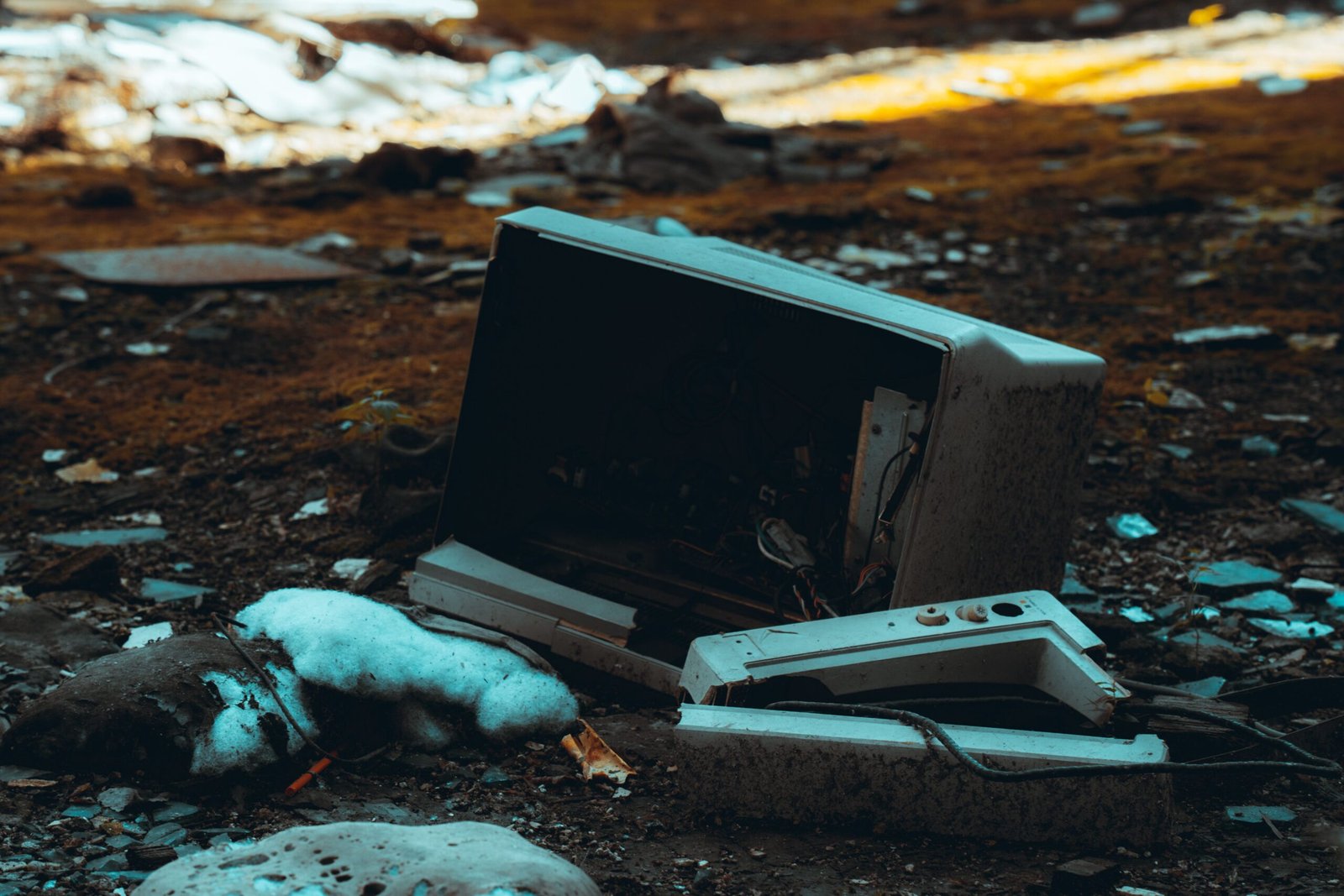
When electronics end up in ordinary landfills, especially poorly managed ones, the casings break down and the metals inside begin to leach out. Rain moves those metals through the waste and carries them into the soil underneath. Over time they can reach groundwater, rivers and wells. Heavy metals don’t break down the way food scraps do. They stay where they are, building up in sediment and in the bodies of plants, fish and animals that live nearby.
Communities that depend on that water for drinking or farming feel the effects first. Studies around informal e-waste sites in parts of Asia and West Africa have found lead, cadmium and other metals in soil and water at levels far above safe limits.
Air Pollution
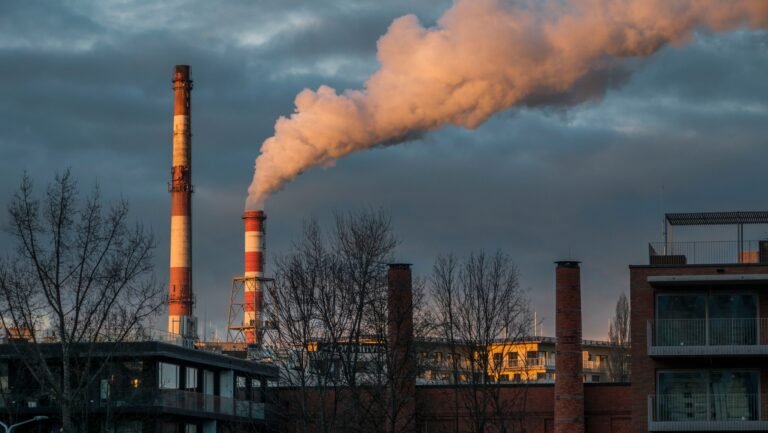
Burning is the other common fate for old electronics, and it’s often the cheapest way to get at the copper inside cables. Burning plastic-coated wire releases dioxins, furans and fine particles. Those fumes travel, settle on crops and enter the food chain. For the people standing next to the fire, usually without masks or any protective equipment, the exposure is direct and constant.
Climate and Resource Costs
E-waste is also a climate issue, though that connection gets less attention. Making a new phone or laptop takes a surprising amount of energy and raw material, and most of the carbon footprint of a device comes from manufacturing rather than from using it. Every device that is thrown away early, and replaced, means that cost is paid again. Mining new metals, meanwhile, tears up landscapes, uses huge amounts of water and often happens in places where labor and environmental protections are weak. Recycling the metals we’ve already dug up is generally far less damaging.
Human Health
The environmental risks are really human risks as well. Workers who dismantle electronics without protection can breathe in dust and fumes day after day. Research on communities near informal recycling sites has linked exposure to problems such as reduced lung function, damaged DNA, and developmental harm in children, including lower birth weights and learning difficulties. These aren’t abstract future possibilities. They are being documented now, often among people who earn very little and have few alternatives.
The Informal Recycling Trap
It’s worth being honest about why informal recycling exists at all. In many countries, there’s simply no affordable formal system for handling old electronics. Meanwhile, the materials inside them have real value, and there are people who badly need the income.
Places like Guiyu in China and Agbogbloshie in Ghana became famous in the 2000s and 2010s as examples of this. Young men and sometimes children smashed devices open with hammers, burned cables on open ground, and sold the recovered copper by weight. Much of the material arriving at these sites was shipped in from wealthier countries, sometimes labeled as donations or as used goods that could be reused, even when much of it was clearly beyond repair.
The Basel Convention, an international treaty, was designed in part to stop that kind of dumping by controlling the movement of hazardous waste across borders. It has helped, but enforcement is patchy, and illegal shipments continue. The deeper issue is that exporting the problem doesn’t solve it. It simply moves the harm to people with the least power to refuse it.
The point isn’t to blame the workers. They are doing what they can in a system that has left them few choices. The goal should be to build safe, legal, fairly paid ways for that same work to happen.
What Responsible Recycling Looks Like
Collection. Devices have to be gathered first, through take-back programs, retailer drop-off points, community collection days or municipal sites. The easier collection is, the more material enters the system. Plenty of people hold on to old electronics simply because they don’t know where to take them.
Data security and reuse. Before anything is broken down, the best option is to ask whether the device can be used again. Refurbishing and reselling extends its life, which is almost always better for the environment than recycling. Before that happens, any stored personal data has to be properly wiped or destroyed.
Safe dismantling. Items that can’t be reused are taken apart by trained workers. Hazardous components such as batteries, mercury lamps and capacitors are removed first and handled separately, so they don’t contaminate the rest of the material.
Material recovery. Shredders, magnets and sorting systems separate metals, plastics and glass. Specialized smelters then recover precious metals from circuit boards under controlled conditions, with filters and scrubbers capturing harmful emissions. Done this way, gold, copper, cobalt and other metals can go back into the supply chain.
Safe disposal of what’s left. Some residues can’t be recovered. These need secure, lined and monitored facilities rather than open dumps.
It’s also worth knowing what to look for when choosing a recycler. Certifications such as R2 (Responsible Recycling) and e-Stewards require facilities to meet standards for worker safety, environmental protection and downstream tracking, meaning the recycler can show where materials end up. A company that offers to take your electronics for free, but can’t tell you what it does with them, deserves some suspicion.
The Role of Policy and Industry
Individual choices matter, but they can only do so much in a system that’s designed around disposal. Policy shapes what’s possible.
One of the most effective tools is Extended Producer Responsibility, or EPR. Under these schemes, manufacturers are made responsible for the end-of-life handling of the products they sell, often by funding collection and recycling. The European Union’s WEEE Directive is the best-known example, and similar rules exist in parts of North America, Asia and Africa. When producers pay for the cost of dealing with their products, they have a reason to design them to be longer-lasting, easier to repair and simpler to take apart.
Right-to-repair laws push in the same direction. If people can get spare parts, manuals and affordable repairs, devices stay in use longer, and the volume of waste falls before recycling even becomes necessary. Standard charging ports, longer software support and modular designs all help too.
Globally, only a minority of countries have specific e-waste laws, and even fewer enforce them well. Strengthening regulations, funding formal collection systems in low-income regions, and supporting informal workers to move into safe, legitimate jobs are all practical steps that would make a real difference.
What Individuals Can Do
It’s easy to feel that one person can’t change much when the problem is measured in millions of tonnes. But the choices people make at home add up, and they influence what businesses and governments consider normal.
The first and simplest step is to buy less and keep things longer. A phone used for five years instead of two cuts its yearly footprint dramatically. When something breaks, check whether it can be repaired before assuming it’s finished.
When you do need to let go of a device, think about passing it on, selling it, or donating it, as long as it still works. Wipe your personal data first. For anything that no longer functions, find a certified recycler or an official take-back program, many of which are free. Never throw batteries, especially lithium-ion ones, into normal trash, as they can start fires in garbage trucks and waste facilities.
It also helps to think before buying. Choosing products from companies that offer repair services, long warranties and take-back schemes sends a market signal. Asking questions about what happens to a product at the end of its life is a small but useful form of pressure.
And finally, talk about it. Many people simply haven’t realized that the drawer full of old chargers and phones is part of a bigger story. A conversation with friends, family or colleagues can be enough to get a box of forgotten devices to the right place.
Conclusion
Electronic waste sits at an uncomfortable crossroads. It is both one of our fastest-growing pollution problems and one of our most overlooked sources of valuable materials. The hazards are real: toxic metals in soil and water, harmful smoke from open burning, and serious health risks for workers and communities who deal with the waste unprotected. But those outcomes aren’t inevitable.
Proper recycling, thoughtful product design, strong laws and sensible personal habits can turn a mounting problem into a more circular system, where materials are recovered, devices last longer, and fewer people are harmed along the way. That kind of shift takes effort from manufacturers, governments and ordinary consumers alike.
The next time a gadget stops working or simply stops feeling new, it’s worth pausing for a moment. The question isn’t only what to buy next, but what happens to the thing in your hand. A little care at that point makes a bigger difference than most of us realize.
About the Author